We Keep Having the Same Argument
On repetitive conversations, emotional meaning, and the places couples lose contact with one another
Many couples find themselves returning to the same conversation, even when the subject appears to change.
It may be about money, parenting, family, time together, household responsibilities, or the familiar ache of not feeling heard.
And yet, beneath the changing content, the emotional experience is often strikingly familiar.
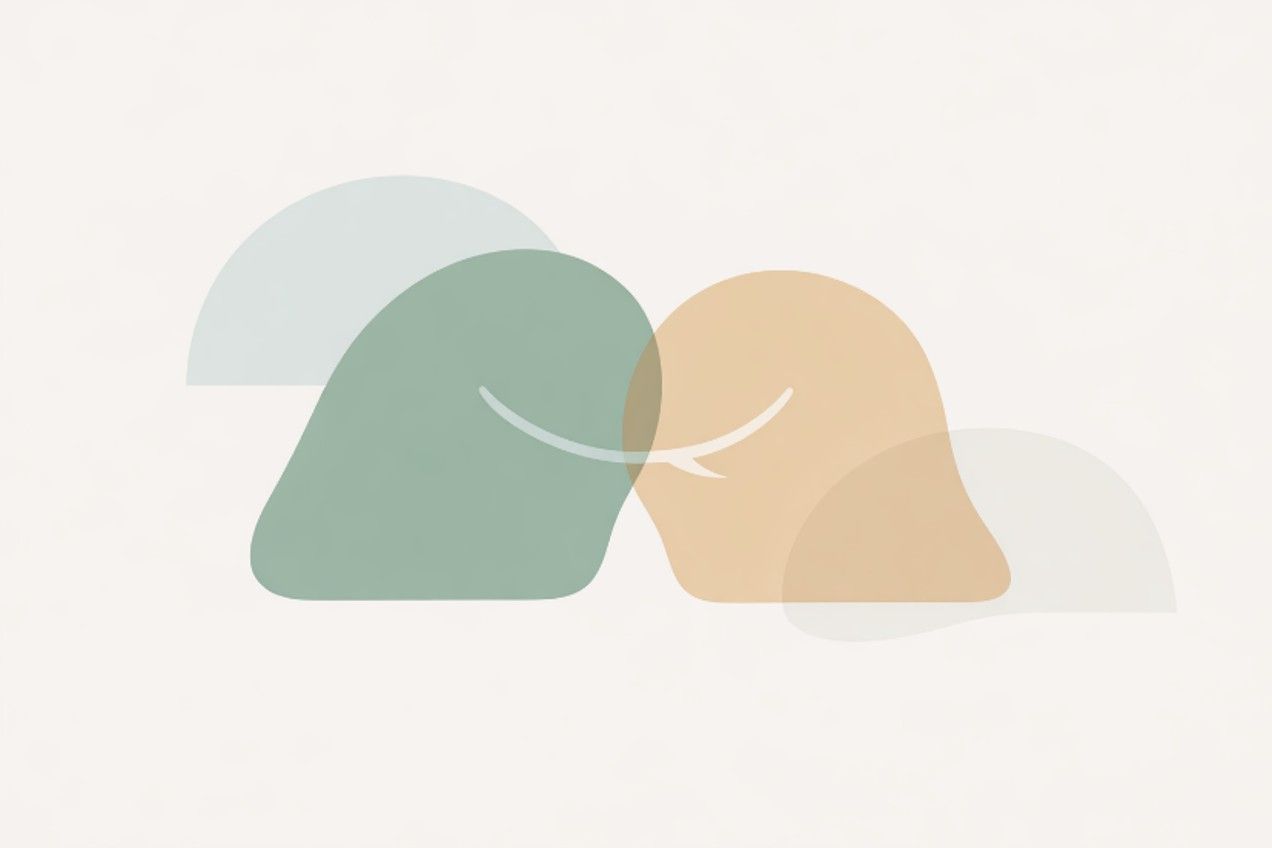
One person may feel alone, dismissed, or unseen. The other may feel blamed, inadequate, or as though nothing they do can be received in the right way.
Over time, these conversations can stop being genuine efforts to reach one another and become something else: a way of protecting against hurt, warding off shame, or trying not to feel so alone inside the relationship.
What is said, and what is meant
In charged moments, words often carry more than their surface meaning.
What is spoken is not always the whole story; what is heard is often shaped by old sensitivities, accumulated disappointments, and the emotional history of the relationship itself.
A sentence that feels ordinary to one partner may land as criticism, rejection, or withdrawal to the other.
Sometimes the work is not to find better wording immediately, but to slow the conversation enough to notice what feeling is moving underneath it.
What may be underneath the words
Instead of...
“You never listen to me.”
What may be trying to come through...
“I don’t feel heard or understood by you.”
Instead of...
“You’re always distracted.”
What may be trying to come through...
“I miss feeling important to you.”
Instead of...
“Why am I always the one doing everything?”
What may be trying to come through...
“I feel alone carrying things.”
Instead of...
“You’ve changed.”
What may be trying to come through...
“I miss how things used to feel between us.”
Instead of...
“Fine. Forget it.”
What may be trying to come through...
“I don’t feel safe continuing this conversation.”
Instead of...
“You always take their side.”
What may be trying to come through...
“I want to feel like we’re together in this.”
| Instead of... | What may be trying to come through... |
|---|---|
| “You never listen to me.” | “I don’t feel heard or understood by you.” |
| “You’re always distracted.” | “I miss feeling important to you.” |
| “Why am I always the one doing everything?” | “I feel alone carrying things.” |
| “You’ve changed.” | “I miss how things used to feel between us.” |
| “Fine. Forget it.” | “I don’t feel safe continuing this conversation.” |
| “You always take their side.” | “I want to feel like we’re together in this.” |
What a partner may hear
Sometimes people react not only to the words themselves, but to the emotional meaning attached to them.
“I’ll just do it myself.”
What may be heard: “I can’t rely on you.”
“Why are you always late?”
What may be heard: “You don’t care.”
“Can you stop leaving everything to me?”
What may be heard: “I’m failing.”
“Forget it.”
What may be heard: “You’ve given up on me.”
When a conversation begins to repeat itself
When couples find themselves in a circular conversation, the instinct is often to press harder: to explain more clearly, defend more thoroughly, or insist more urgently on being understood.
Yet what tends to help is rarely a perfect phrase. More often it is a different pace, a little more room, and a shift from argument towards curiosity.
That might mean slowing the exchange down enough for both people to remain present; listening for the feeling beneath the complaint, rather than only the content of the complaint; saying a little less and noticing a little more; pausing before reacting; or recognising when a conversation has become too flooded to be useful.
Often the most important shift is a quiet one: moving from defence towards understanding and remembering that conflict frequently sounds hard on the surface because something more vulnerable is asking to be recognised underneath it.
From criticism towards meaning
Sometimes the surface language of conflict hides a more vulnerable feeling underneath.
The words themselves may sound sharp, blaming, distant, or defensive, while underneath there may be longing, hurt, fear, exhaustion, or a wish for reassurance and connection.
Shifting the wording does not magically resolve conflict, but it can sometimes soften the emotional atmosphere enough for people to hear one another more clearly.
A closing thought
Relationships rarely become strained because people do not care for one another.
More often, people lose contact while trying to protect themselves from hurt, from shame, from longing, or from the fear of no longer mattering to the person they love.